Websites for Medical Practices
Patients read your website before they ever call your front desk. I build medical practice sites that answer their questions fast and make the next step obvious.
Patients decide before they ever call
A new patient does not start with your phone number. They start with a search, usually on a phone, often at night. They compare two or three practices in a few minutes and call the one that made things clear.
That comparison is quiet. You never see the patients who looked, felt unsure, and moved on. A practice website exists to win that silent comparison, and most lose it by burying the basics.
The behavior does not change with the zip code. A specialty group in a metro area and a two-provider office in a small Florida town are both being screened the same way, on a phone, in about ninety seconds.
The three questions your site must answer in under a minute
Every patient visit to a practice website is the same short interview:
- What do you treat, and is my problem on the list?
- Do you take my insurance?
- Where are you, and when can I be seen?
If a patient has to dig for any of these, some of them give up. I structure practice sites so services, insurance participation, and location details sit within one tap of the homepage, written in plain language rather than clinical vocabulary. A patient searching for knee pain should not have to know the word orthopedics to find you.
Forms that respect privacy
Healthcare websites carry a responsibility most industries never think about. A general contact form that invites people to describe their situation will collect health information over a channel that was never meant for it.
I build forms with a privacy-first mindset. They ask only for what your front desk needs to return a call: a name, a phone number or email, a preferred time. The form itself tells patients not to include medical details. Real clinical conversations happen where they belong, on the phone or inside the portal your practice already secures.
Accessibility is part of patient care
Your patient population includes people with low vision, tremors, hearing loss, and screen readers. In healthcare, an inaccessible website is both a legal exposure and a quiet way of turning away the exact people who need care most.
I build with readable type sizes, strong color contrast, keyboard navigation, and properly labeled forms and images. This is not a premium add-on. It is how every medical site I ship gets built.
Spanish-speaking patients are not an afterthought here
Across Florida there are patients in nearly every county who would rather read about a doctor in Spanish. Handing them an auto-translated page reads as exactly what it is.
I write Spanish content natively, as a bilingual designer, not through a translation tool. One of the practice sites in my portfolio, a psychology practice, was built entirely in Spanish because that is who its patients are. If your practice serves Spanish speakers, your website can greet them properly.
Design that feels like a well-run practice
Nobody wants a flashy medical website. Patients want the digital equivalent of a clean, organized office: calm colors, uncluttered pages, photographs that look like your actual practice, credentials easy to verify. Design in healthcare has one job, to make a nervous person feel they are in competent hands. Every layout decision I make on a practice site serves that.
How we work
I have been building websites since 2021 and currently maintain ten sites across six industries, several of them in healthcare, including a specialty physician practice, a state medical association chapter, and a behavioral health practice. I am based in Tampa and work with practices throughout Florida, plus remote projects across the United States. Distance has never been the hard part of a practice website. If you are in Tampa Bay we can meet in person, and everywhere else the whole process runs by call, screen share, and email, exactly as it does for my out-of-state clients.
Maintenance matters more in medicine than almost anywhere else. Providers join, insurance panels change, hours shift. Every site I build stays under active care, so the answer a patient reads is always the current one.
Real work from this industry
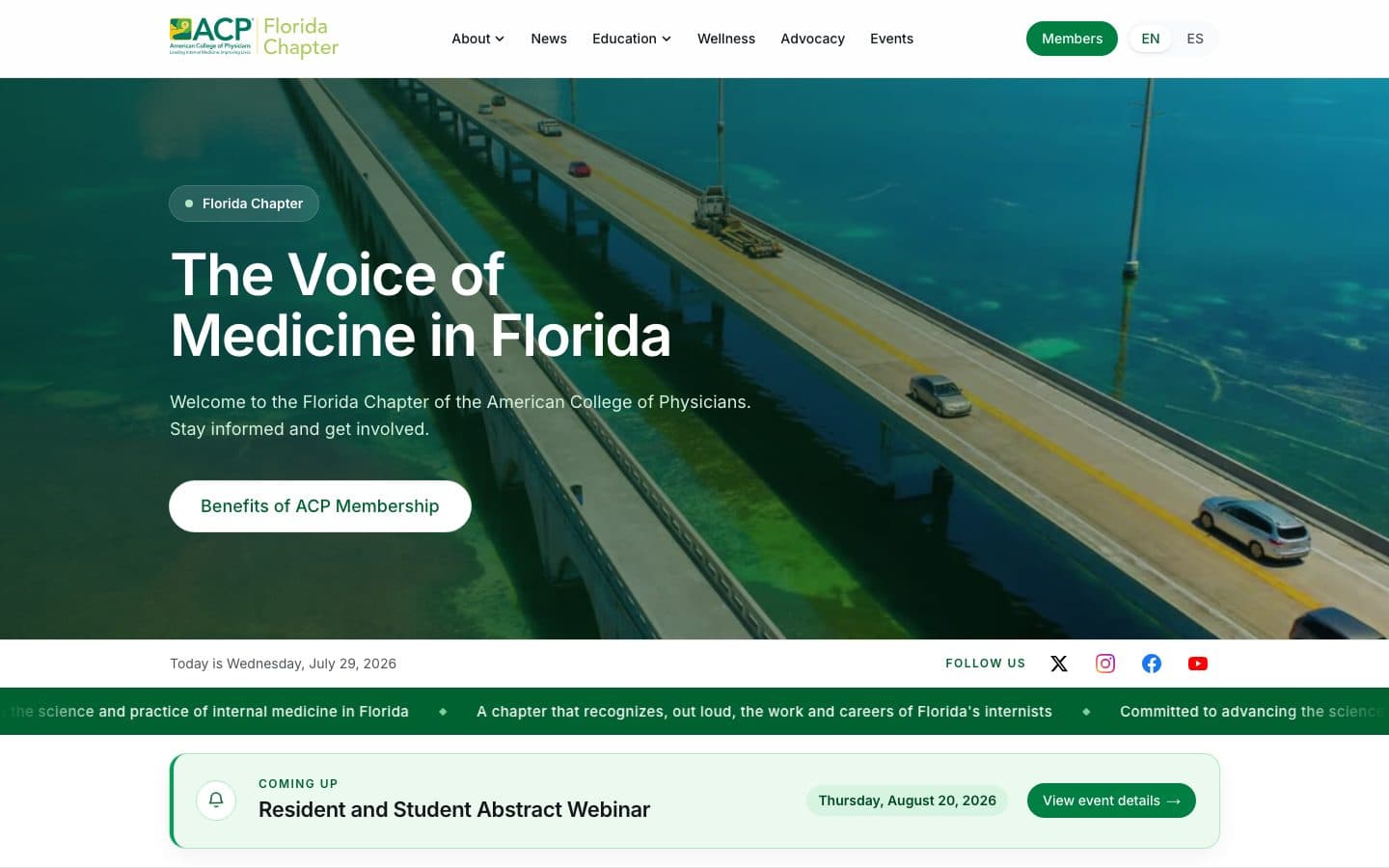
- ACP Florida ChapterA statewide medical association site that keeps physicians informed and engaged.
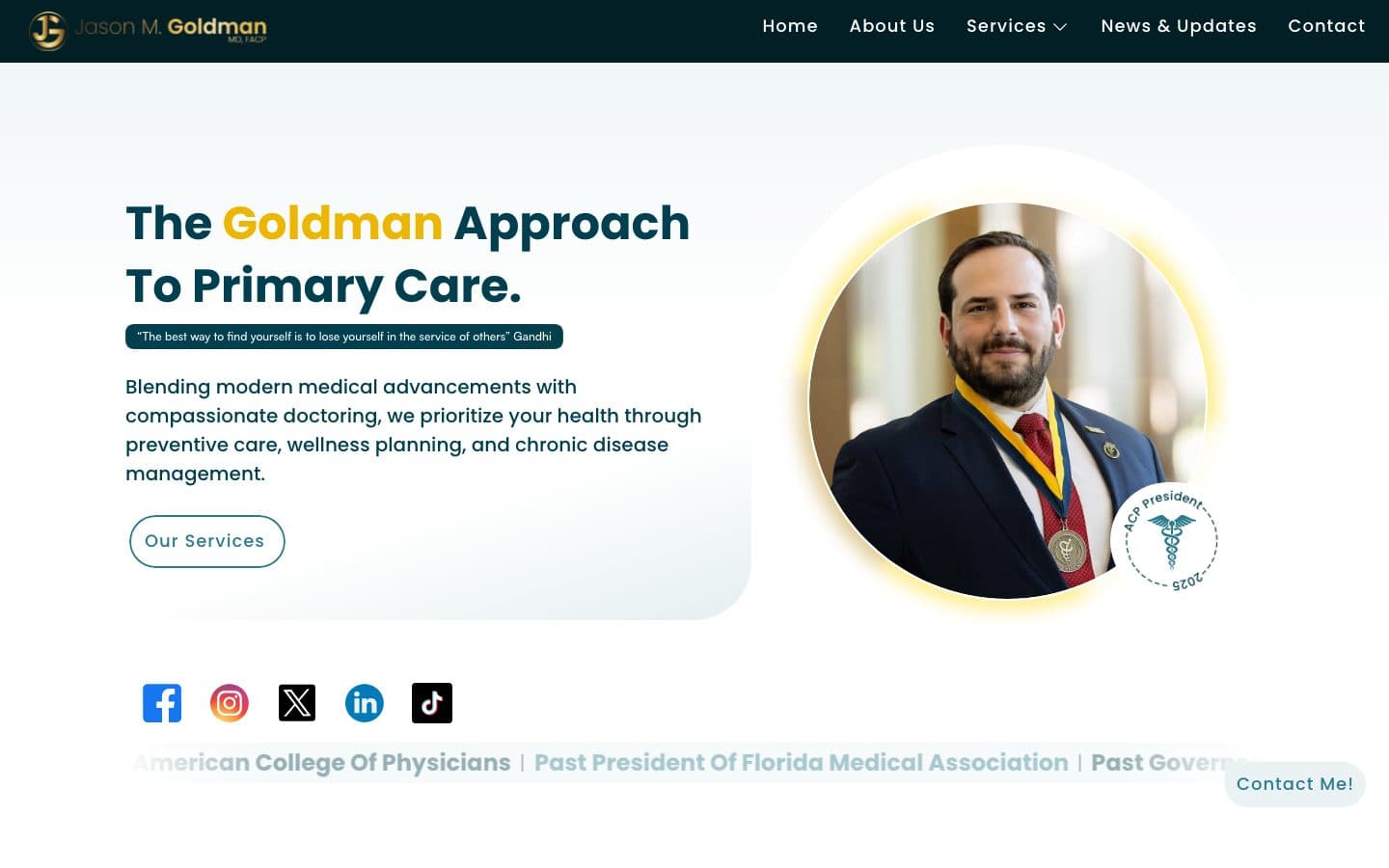
- Jason M. Goldman, MDA physician's practice site built to answer what patients ask before they call.
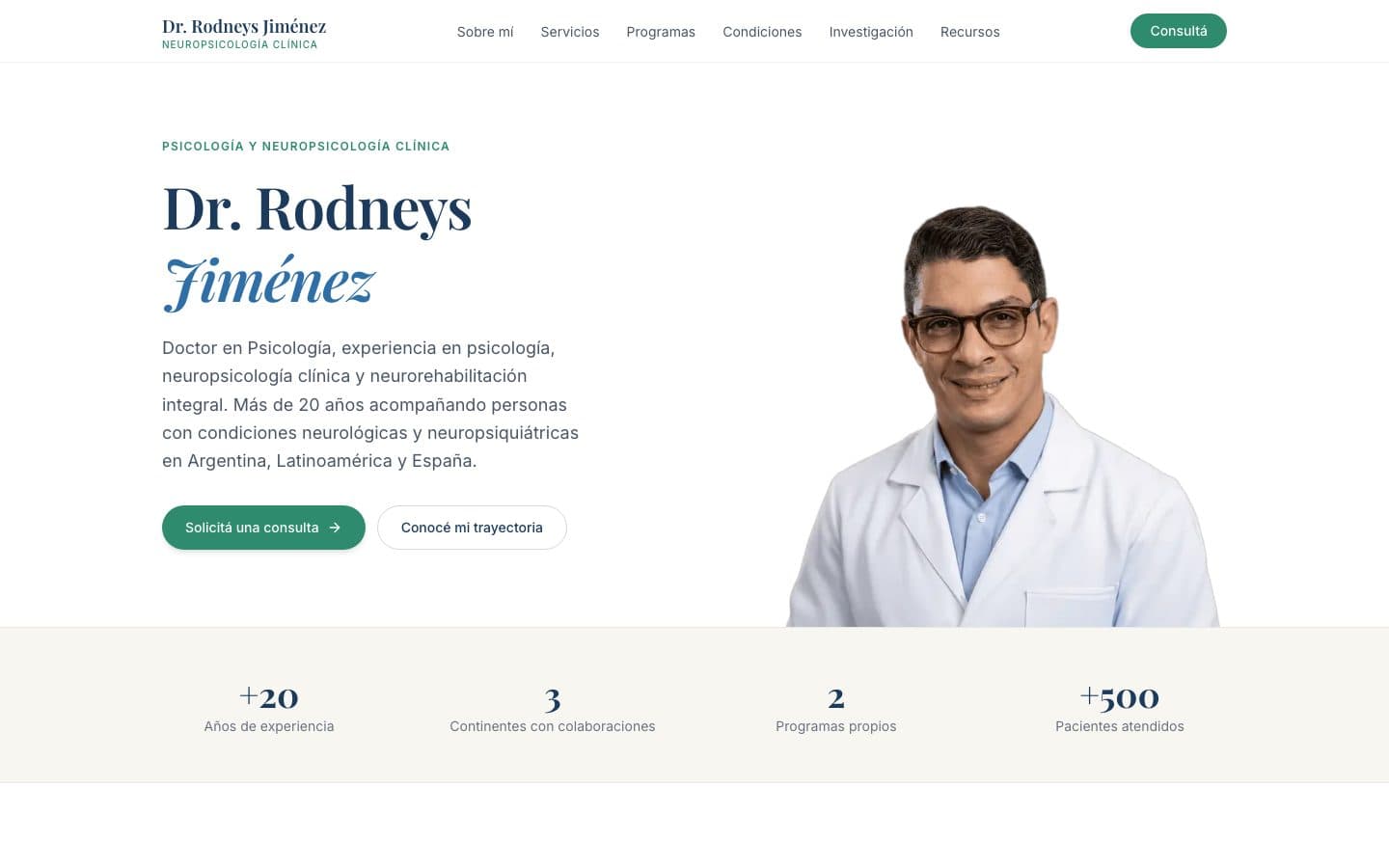
- Psicología con RodneysA behavioral health site built in Spanish for the patients it actually serves.
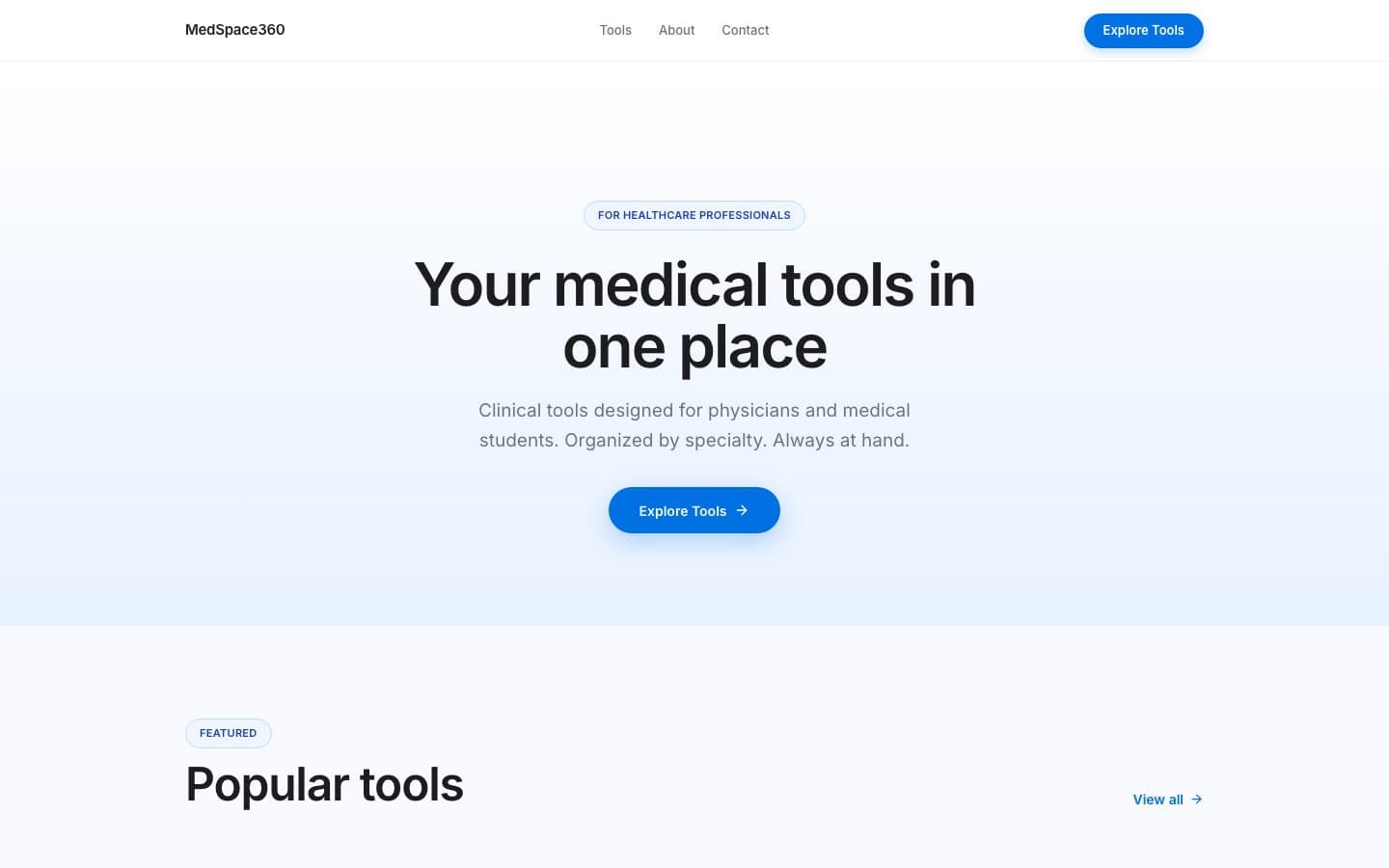
- MedSpace360A digital health platform explained clearly enough for a non-technical buyer.
Common questions
Can the site let patients request appointments?
Yes. I build appointment request forms that collect name, contact info, and a preferred time, nothing clinical. If your practice already uses a scheduling system or patient portal, I connect the site to it so patients land in the tool your staff already manages.
How do you keep contact forms compliant with patient privacy?
Forms on the sites I build are designed so patients are never asked for symptoms, conditions, or other health details. The form's job is to start contact, not to collect a medical history. Anything sensitive belongs on the phone or inside your portal, and the site says so plainly.
Can you build the site in both English and Spanish?
Yes, and the Spanish is written for Spanish speakers, not run through a translator. I have built a behavioral health site entirely in Spanish, and I write bilingual sites natively in both languages.
Will the site work with the EHR and portal we already have?
The site links cleanly into whatever your practice already uses for scheduling, portals, and payments. I do not replace clinical systems. I make sure patients can find them without hunting.
Ready when you are
Tell me about your business in four short steps. I reply within one business day.
Start your project